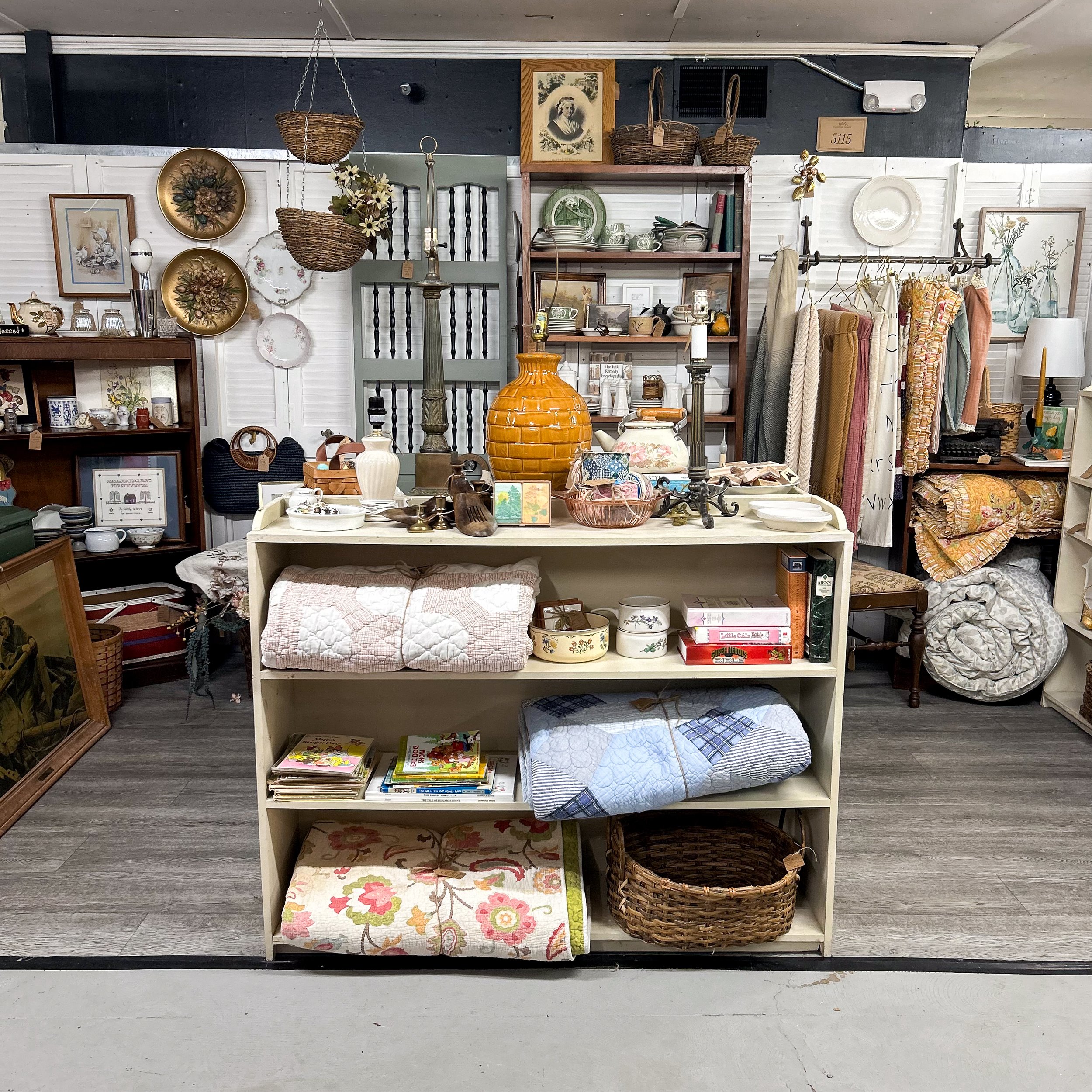
Beginner’s Guide to Vintage Reselling in an Antique Mall
Welcome to the 7-Part Series: Beginner’s Guide to Vintage Reselling in an Antique Mall
(aka everything I wish someone had handed me the day I signed my first booth contract)
Hey friend! Welcome to the exciting world of vintage reselling! If you’ve ever walked out of a thrift store with a cart full of treasures and thought, “I could totally sell this stuff and make money,” then you’re in the right place.
Operating a booth in an antique mall is one of the absolute best, lowest-risk ways to turn your love of old things into a real, profitable business—no giant storefront, no employees, no being chained to the register 60 hours a week. The mall does the heavy lifting (they stay open without you, ring up your sales, and bring in the foot traffic), and you get to do the fun parts: hunt, style, and sell.
This 7-part series is literally me dumping every single thing I’ve learned (the good, the messy, and the “why is this still in my booth after six months?”) straight into your lap. I’ve been ridiculously intentional about picking the brains of vendors who’ve been doing this for years (and sometimes decades) longer than me, and now I’m handing it all to you—no gatekeeping here.
Here’s what we’re covering over the next seven posts:
Part 1 – Understanding the Antique Mall Model (and why it’s perfect for beginners)
Part 2 – Getting Started
Part 3 – Setting Up Your Booth
Part 4 – Marketing Your Booth
Part 5 – Managing Finances
Part 6 – Common Challenges and Solutions
Part 7 – Scaling Your Business
Many of us start this as a hobby or creative outlet, but with a little (okay, a lot) of intentionality, it can grow into something that pays off debt, funds vacations, or helps with the kids’ tuition. How big it gets is completely up to how much you’re willing to learn and actually do.
I’ve made all the rookie mistakes so you don’t have to, and I’m laying it all out—tips from my shop owners, wisdom from my fellow vendors, and every hard-knock lesson from my own booth.
So grab a coffee (or a Diet Coke—zero judgment), bookmark this page, and let’s turn your love of vintage into a business that actually makes money.
See you in Part 1!
-Chris