Beginner’s Guide to Vintage Reselling in an Antique Mall Pt. 1
Understanding the Antique Mall Model
Welcome to the exciting world of vintage reselling! Operating a booth in an antique mall offers a unique opportunity to turn your passion for vintage treasures into a profitable business. This guide is designed for beginners, providing step-by-step instructions, insider tips, and practical strategies to help you thrive as a vintage reseller. Whether you're drawn to mid-century furniture, retro clothing, or antique decor, this guide will equip you with the tools to succeed in an antique mall setting.
Many vendors start out as a hobby or creative outlet, but with some intentionality, this hobby could easily thrive into a business that helps you pay off debt, fund a dream vacation, or help pay for kids' tuition. The scale of your business is totally dependent on how much you choose to learn and what you implement. In these pages, I will share with you everything I have learned online, from my shop owners, from my fellow vendors, and from my personal experience. I have chosen to be very intentional in learning as much as I can from vendors who have been doing this for years and decades longer than me, and I’m sharing it all with you.
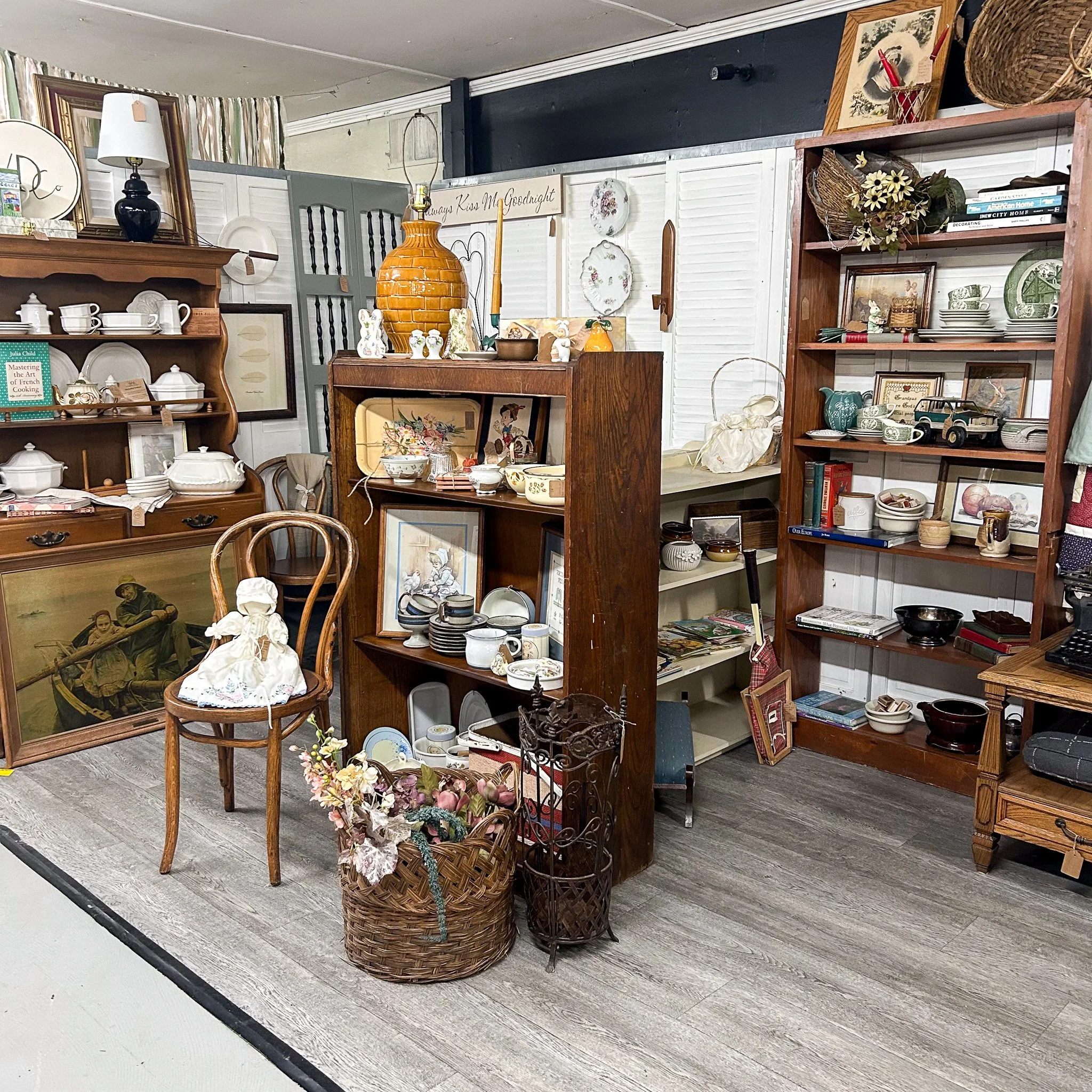
Understanding the Antique Mall Model An antique mall is a retail space where multiple vendors rent booths or display areas to sell vintage, antique, and collectible items. Shoppers browse a variety of curated goods under one roof, and the mall handles transactions. The financial structure of every mall is different. A monthly fee based on the square footage of your space is common, or a commission on your monthly sales. The most common is a combination of the two.
Why Choose an Antique Mall?
Low Overhead: No need to rent an entire storefront or manage a standalone shop. Not to mention, the store will operate without you having to be there.
Built-in Foot Traffic: Antique malls attract collectors and enthusiasts; they also do marketing for the store and build loyal customers.
Community Support: Many malls offer guidance and a sense of camaraderie among vendors. At a recent vendor meeting I attended for my shop, we were asked about our favorite part of being a vendor. The overwhelming answer the vendors gave over and over again was about the fellow vendors and staff, and how much it feels like family.
Flexible Commitment: Renting a booth allows you to test the waters without a long-term lease.

Key Considerations
1. Booth Rental Costs: Monthly fees range from $100-$500, depending on location, size, and mall popularity. Most charge a price per square foot. The price might also vary throughout the mall.
2. Commission Structure: Understand the mall’s commission rate and any additional fees. Some malls collect a commission on top of the flat rental cost. Other costs to be aware of are credit card processing fees or software services they use to track the sales of the vendor’s products.
3. Rules and Regulations: Each mall has policies on booth maintenance, pricing, and restocking. Request a vendor contract to review terms.
Be Intentional
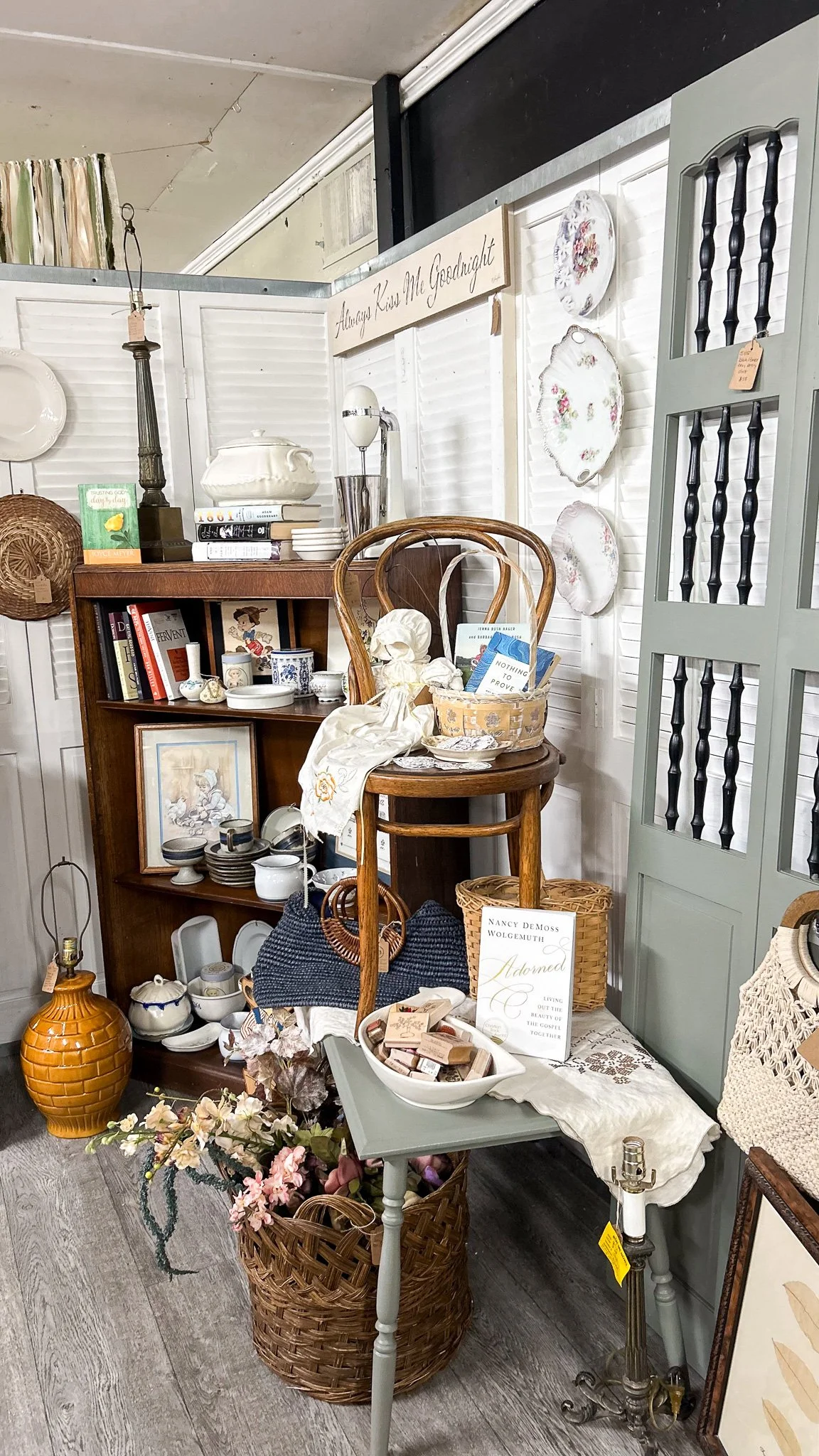
I have chosen to be very intentional in learning as much as I can from vendors who have been doing this years and decades longer than me. Don't be afraid to ask questions and for feedback from shop owners, employees, and fellow vendors. Most are more than willing to help others learn. When fellow vendors are doing well, it helps the whole store succeed.
Tip from the Vendors
If items are sitting in your booth for 2-3 months, it’s likely time to drop the price. Find out your mall’s policy if they have special “price drop” tags. This can help draw attention to a good deal. But too many tags like this can begin to look like your booth is a garage sale, not a vintage booth.